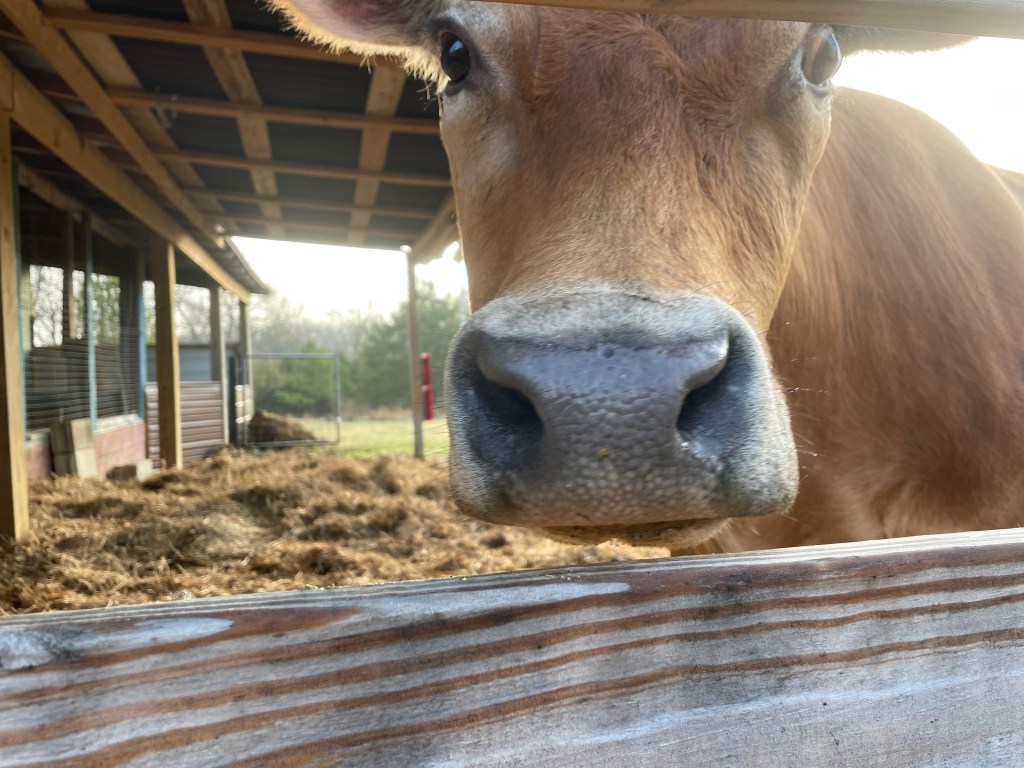
We’ve had our Mini Jersey, Belle, since June 2023. She was sold to us as a top-dollar, 4-yr-old, healthy, very-well-trained, experienced momma and milker. When she came to us, it was with a 2-month-old heifer calf, who eventually went off to a new farm, but while she was here, she nursed from her momma. We were told by the owner they were getting a gallon of milk a day above what the calf was drinking. We milked her the day of her arrival and got about a cup of milk. Hmmm, that’s not quite a gallon. Reaching out to the former owner, we were told they were only getting 1/2 a gallon. Ummm. So, which is it? Another phone call revealed the calf doesn’t drink from the front right quarter because it can get clumpy, but the owner just rubs mint balm on it and it always clears up in a day. Did they run a mastitis test? No. Why didn’t they tell us this before? Oh, sorry, didn’t think about it. Okay, so last question. Why is she trying to kick me when I milk that quarter? No idea.
Months later, after kicking, peeing on the stanchion, not giving any milk, her calf finally left and we got down to business. We milked 2 gallons a day for a couple weeks. That’s better. But why is she still kicking when one touches that front right quarter? And why is there a little bump on the end of her teat? After a few phone calls looking for information, we found the original owner who told us she had an injury during her first lactation and ripped the end of that teat off. They were forced to extract her milk with a syringe. Well, if that doesn’t introduce pathogens to a quarter, I don’t know what would. That would explain why she gets clumpy in that quarter. That teat never healed right and remains open all the time and is subject to all environmental pathogens. Now, we’re getting to the bottom of the clumpy-ness. After running mastitis tests almost daily that came back clear every time, I finally called a very good holistic cow-product company in Pennsylvania, and I was told to give her their herbal supplement, which got rid of the clumpy-ness in a day or two.
A couple weeks later, it came back. I used the herbal products again, and it went away again.
A couple weeks later, it came back. Something wasn’t right. I sent a milk sample to the lab and it came back with Strep B, E.coli, and Klebsiella. A vet came out and pumped her full of antibiotics but said Klebsiella is very, very hard to get rid of as it’s antibiotic resistant.
After 3 weeks, I sent in another milk sample to see the results. The Strep and E.coli were gone, but as suspected, the Klebsiella was still there. Perhaps we’d just have to live with that. We found another issue though. Now she tested positive for Serratia marcescens and Staph B. Ugh. The vet said there’s nothing we can do except dry that quarter off and don’t use it. That’s exactly what we did. Of course, we had to throw all her milk away for a while due to all the antibiotics she just had. By the time we got her system cleared and that quarter dried off, we got about a gallon of milk a day for a couple months. Then we dried her off as she was due with a new calf in a couple months.
That brings us to now.
She was due June 13 but started showing signs of impending labor May 23. She got very solitary, hanging out in the barn a lot, then refusing to eat her grain which is completely unlike her, and by May 30, she was acting very lethargic and shuffling her back feet like it was painful to walk. Fortunately, she calved with no issues on June 1!! We got a beautiful little heifer calf whom we named Callidora, which is an ancient greek name meaning Gift of Beauty. We call her Callie, for short.
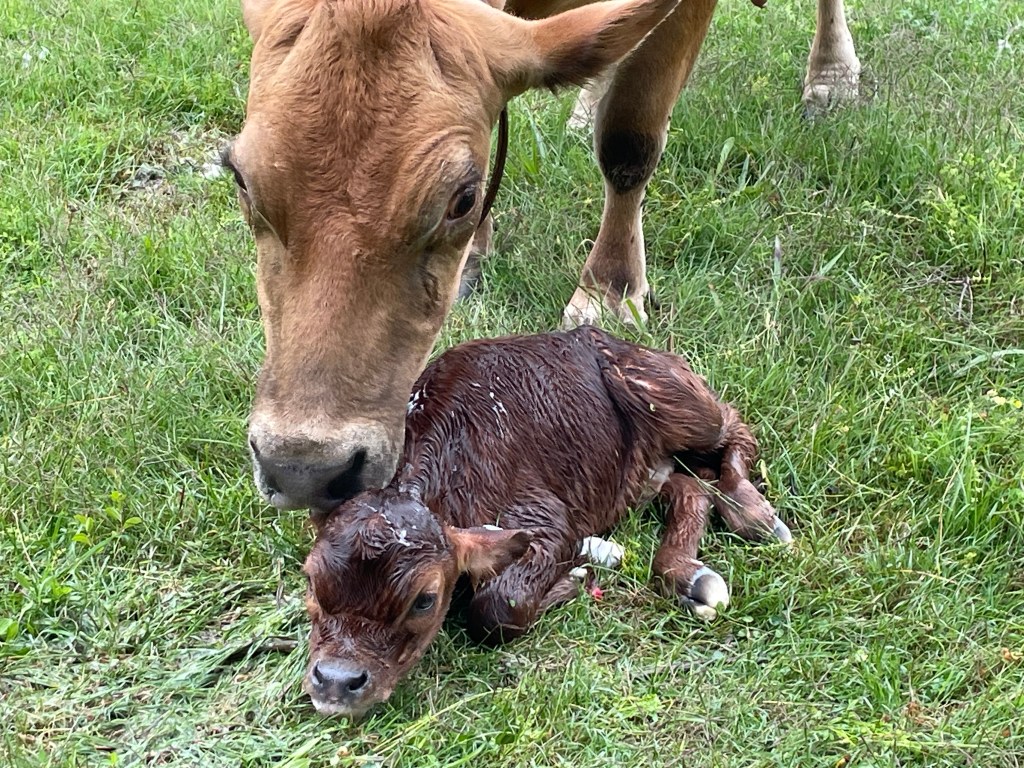
We want to keep Callie and would like her to be bottle fed, so we started milking Belle immediately. The bad quarter was rock hard and we couldn’t get any milk out of it. Her appetite didn’t improve after calving, and by June 4, she had developed a fever and diarrhea. We loaded her in a trailer and drove her an hour and a half to the cow hospital, where she remained for four days. They again pumped her up with antibiotics, along with tube feeding her, giving her probiotics, and pepto bismol, and banamine for pain.
At the end of her stay, we were told by the vet to NEVER, EVER breed her again. What had happened was: when she came into milk, the pathogens in that bad quarter exploded in her system and she was septic and we got her treatment just in time. Next time we wouldn’t be so lucky.
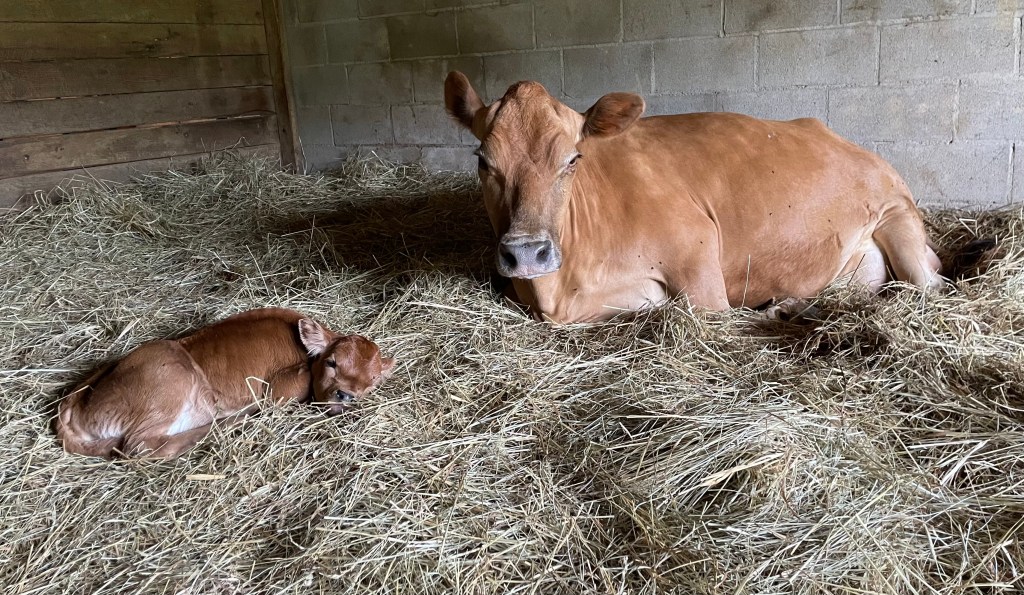
We paid top dollar for a healthy milk cow and we now just have a pet, but at least we saved her. I think she was severely let down by two different owners, so she will stay here and be taken care of properly. Her baby is in a different field on the farm for now, but goes into a stall where they can see each other and lick each other’s faces. After Belle is completely dried off and Callie is completely weaned, they will be together for the rest of their lives. Stewardship of livestock is so very important, and sometimes humans suck at it.
Sweet dreams, my Bellie Jellie and Little Callie Moo. You are safe and loved.
 Trace Creek Acres
Wonderful ending to a sad story. Thank God Belle has y’all to love and care for her. ❤️
LikeLike